
Wine Caves

home of the wines

MILESTII MICI - MOLDOVA


Moldova, sandwiched between Romania and Ukraine, holds a rich tradition in winemaking dating back thousands of years. Low hills, sun drenched plains, flowing rivers, and moderate climate shaped by the Black Sea basin provide model conditions to grow grapes, rivaling other renowned vineyard regions across the continent.

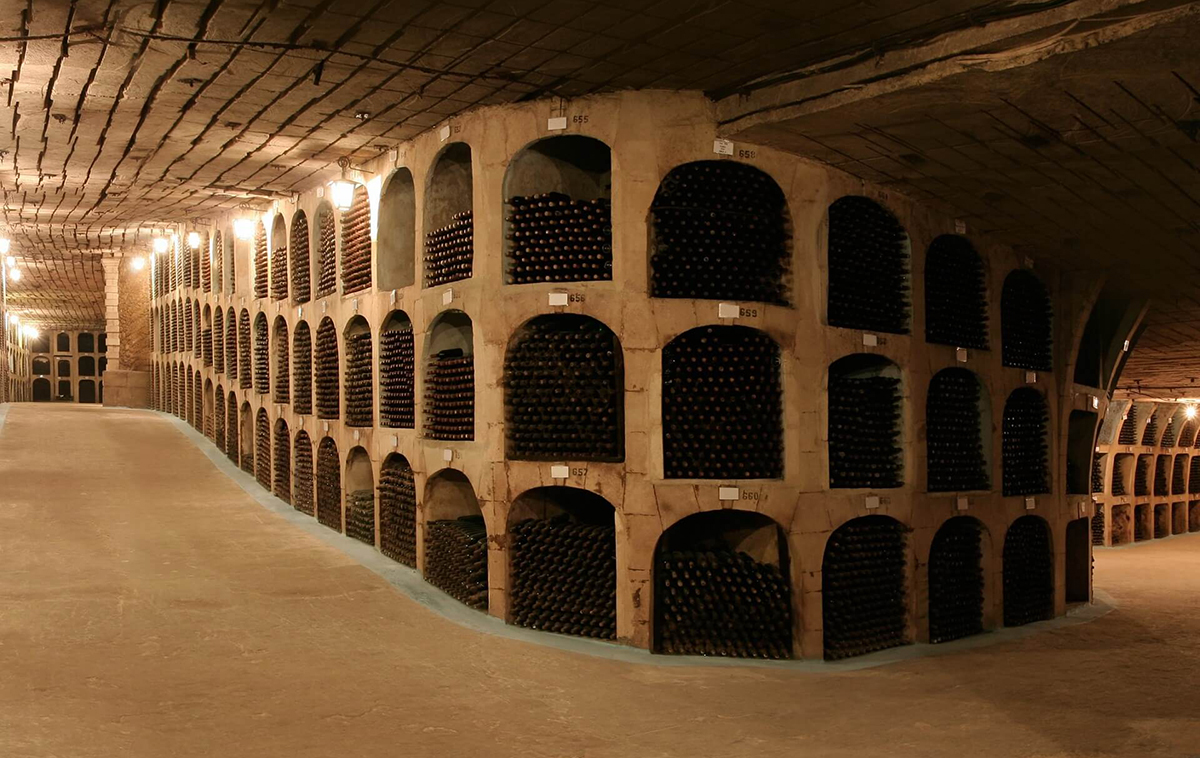
Moldova’s Mileștii Mici proudly claims the title as the largest wine cellar in the world.

The wine production from “Milestii Mici” is well known in many countries from all over the world and is appreciated at a high level by wine specialists with great reputation.
The underground  wine  city “Milestii Mici” is one of  the most important tourist elements in Moldova and attracts visitors  from all over the world.

Every year, the galleries are visited by more than 20.000 tourists from all around the world.
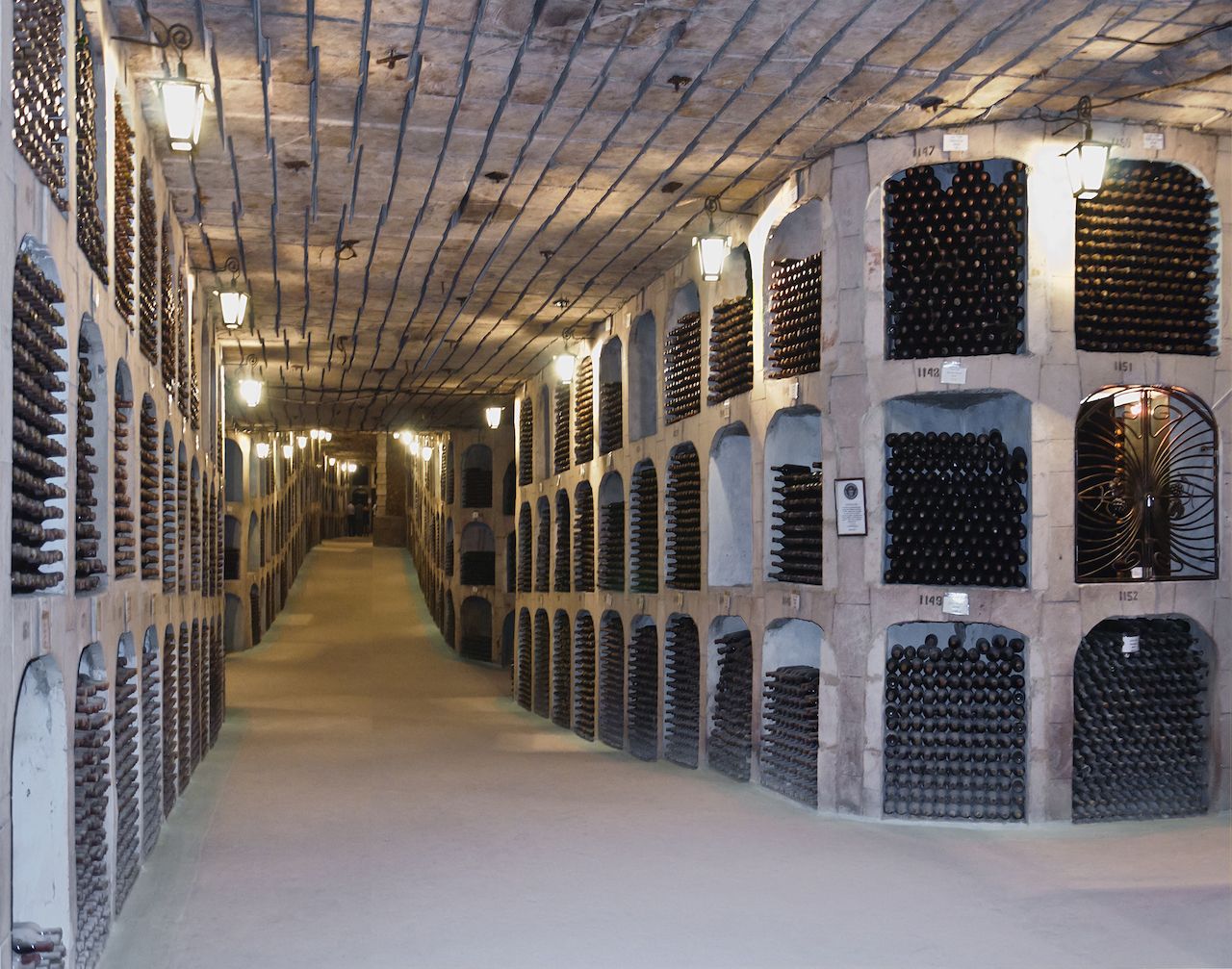
In  2005 “ The  Golden Collection” Milestii Mici was  registered in  the Guinness Book of  Records as the largest wine collection  in the world, counting about 1.500.000 bottles of wine.

Visitors need their own vehicle for an hour tour with an expert guide, which weaves past a natural underwater cascade, the most prized vintages, and into a tasting room some 200 feet underground. Mileștii Mici may boast the biggest stock, but nearby Cricova winery also contains an extensive network of underground tunnels that stretch for about 75 miles. Plenty of tour options start from capital Chişinău, or true aficionados can time their trip for the celebrations surrounding National Wine Day in October. Anytime of the year, Moldova’s pride for its national drink runs deep.

History, tradition, culture, flavor, aroma, in a word quality. All of these may be discovered and lived at the State Enterprise Quality Wines Industrial Comples “Milestii Mici” in an underground galleries’ visit program. Original architecture in the style of old feudal castles, grandiose entrance into the galleries, cascade with crystal water pouring lively its waters – all these may not leave our visitors indifferent.

The excursion itinerary may be passed by car, but it is more pleasant to go for a walk through the small streets shaded by street lights, with such names as Cabernet, Aligote, Feteasca, which make us imagine that we are in a real underground wine city.

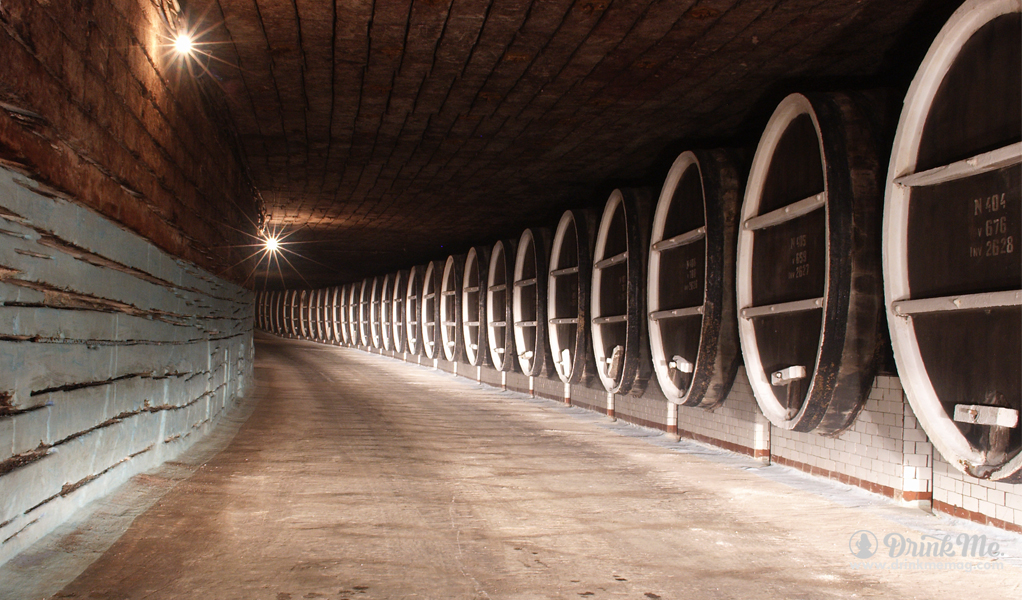
Total length of galleries is 200 km, of which cca 55 km (an area of 182 thousand m²) is used for technological purposes. The width of layer to surface varies from 30 to 85 m. Big oak barrels were assembled at the enterprise in 70-80’s, the wood was imported from Russia and Ukraine. Their capacity varies from 600 to 2000 wine decaliters.

Even the most captious visitor will be satisfied of the quality of the “Milestii Mici” collection wines.The architectural style of the "Golden Collection", which is the pearl of our enterprise, resembles with ancient Greek temples. The wines lie right there, at a depth of 80 meters, in bottles covered with dust and mould, in small elegant houses which are completed every year. The oldest wine dates from 1969.


The production with the trademark "Milestii Mici" is popular in Moldova, and abroad Japan, Taiwan, Holland, Cyprus, Denmark, Finland, Malaysia, etc.

In the "Golden Collection" Milestii Mici the wines are protected as babies, educated as difficult adolescents. Here come only the best wines, reaching special, delicious tastes.

After several years of storage in the collection the wines acquire rich bouquets and aromatic notes – vanilla, cherries, blackberries, prunes and even astringent cardamom.
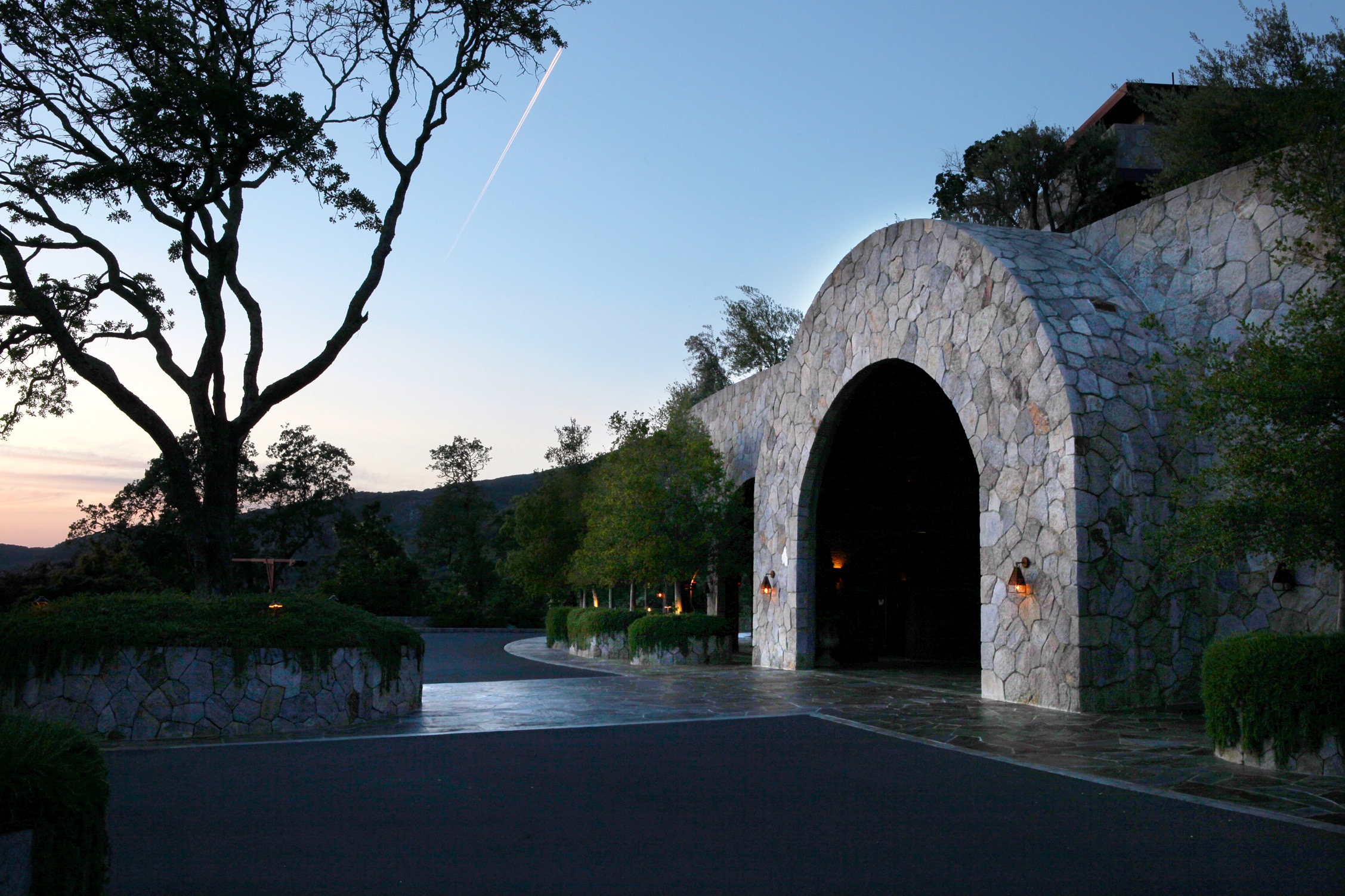
 

PALMAZ VINEYARDS – CALIFORMANIA


With a history of over 140 years of winemaking, for a new world representative, one need look no further then Palmaz Vineyards in California’s Napa Valley.

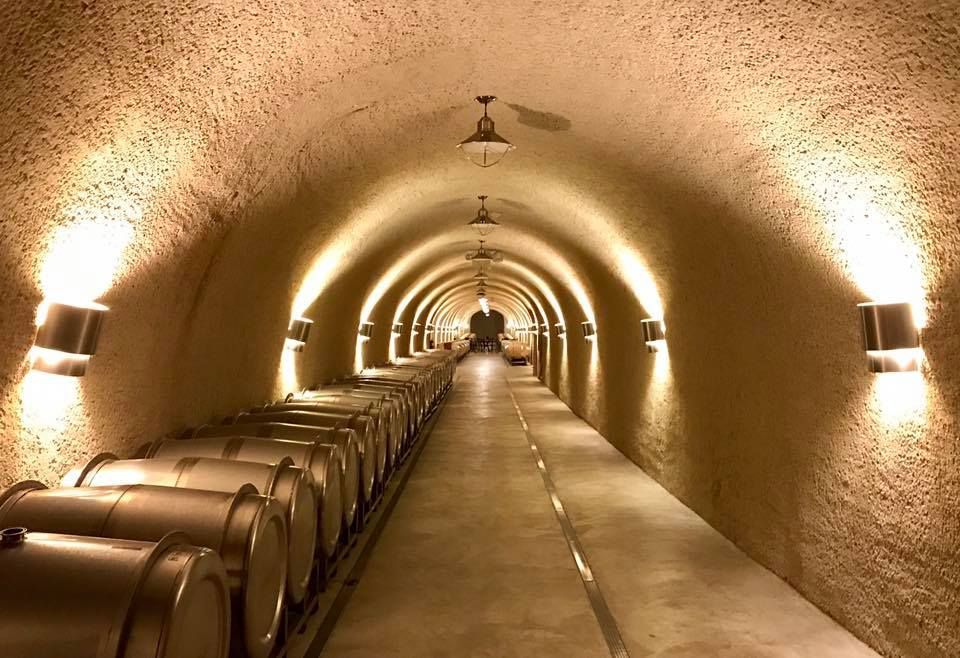
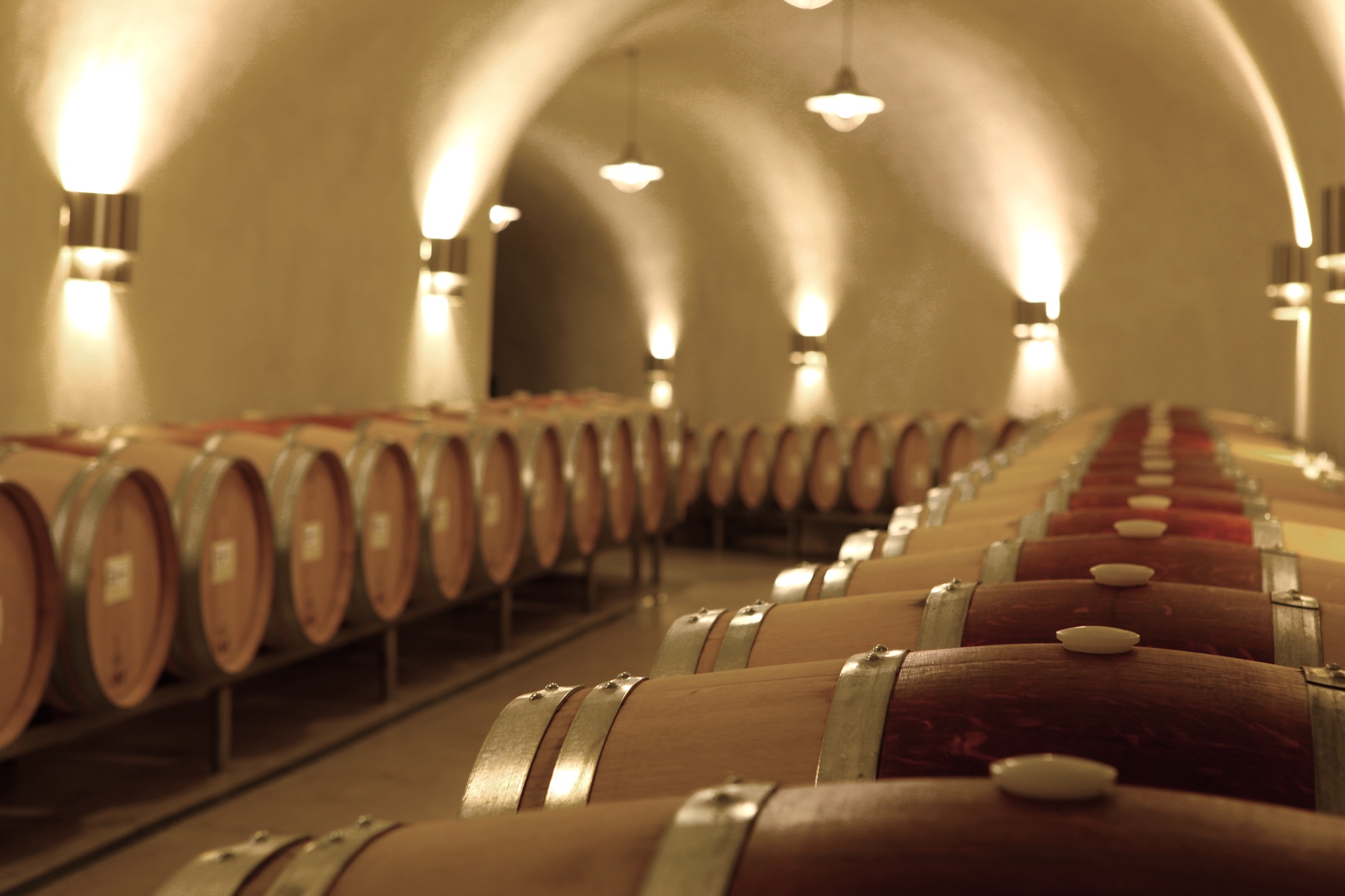
The winery is built into an 18-story cavern in the flank of Mount George, providing it with not only all the benefits of gravity-flow winemaking but also the natural temperature control of a cave. By eliminating mechanical pumps from the winemaking process, gravity-flow design minimizes the turbulence that damages wines’ molecular structure.

Casual visitors to the Napa Valley have no idea the magnitude of this property hidden in the hills just east of the city of Napa. The estate encompasses some 600 acres of which nearly 110,000 square feet of caves are drilled into one of the property’s hillsides. The vertical spatial orientation is impressive – equivalent to an 18 story building spanning 5 primary levels with tunnels radiating out like spokes of a Wheel.

The winery maintains its own water treatment plant – no water goes to waste here. A tunnel on level one stores up to 1.2 millions gallons of water for winery operations.

Arguably the visual highlight of a visit here is their circular fermentation dome. An observation deck overlooks a significant portion of their winemaking operations including a touch screen which controls tank rotation and temperature among other variables. Christian Palmaz, the son of founders’ Julio and Amalia Palmaz designed a unique proprietary algorithmic fermentation control system. It feels otherworldly when this system is portrayed, a series of flashing and colorful lights showing various wine making data points displayed on the dome walls.

CHATEAU DE MEURSAULT - FRANCE


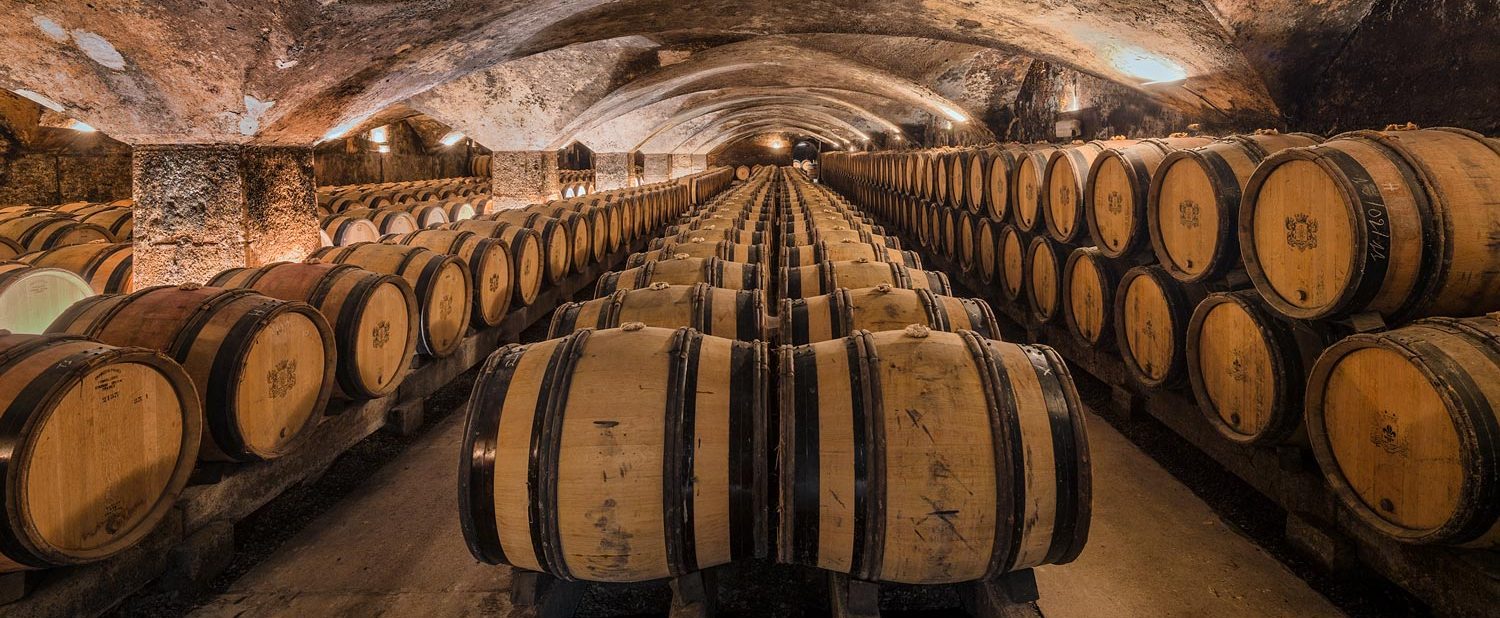
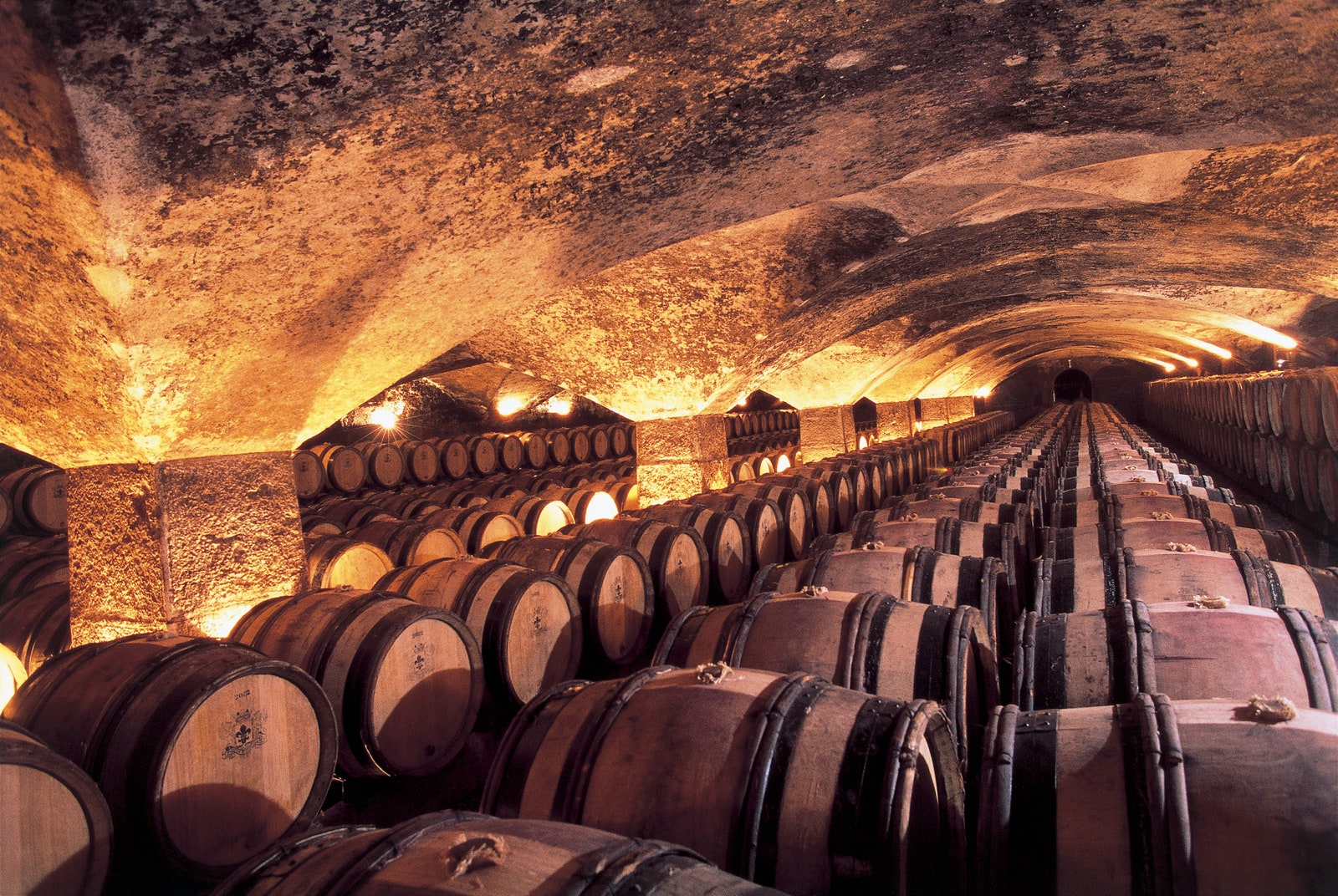
The cellars of this French winery—some of the region’s most visited—date from the 14th and 16th centuries. The cellars were originally dug by the monks of Cîteaux and can hold up to 700,000 bottles and more than 2,000 wine barrels.

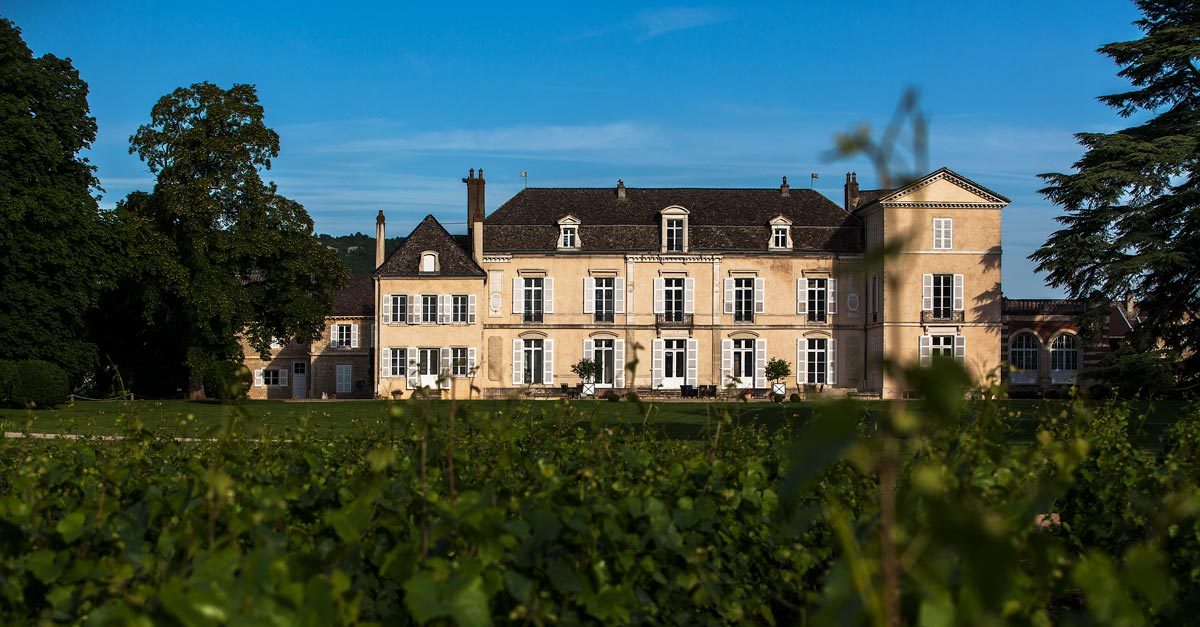
The origin of the Château de Meursault dates back to the 11th century  . At that time, the Capetian Robert I , Duke of Burgundy and son of the King of France Robert II , granted the stronghold of Moulin Foulot to one of his squires . From the 12th century    to the 16th century, the fief often changed owners according to the struggles between the Duchy of Burgundy and the King of France. In 1645, the estate, property of the lordship of Mazeray, was purchased by Pierre Legoux de La Berchère, lord of La Rochepot. In 1662, the estate then became the property of François de Raigecourt and his wife, Béatrice de Beaufremont, and in 1666 passed into the hands of Pierre de Blancheton, a lawyer in the Parliament of Burgundy . The estate remained in this family until the French Revolution , during which time it was confiscated and sold to a merchant from Beaune, Pierre Jobard. His daughter Jeanne-Marie Philippine inherited it and married theJuly 21, 1818Charles Serre, descendant of merchants from Châlon.

At the beginning of the 19th  century, the property was enlarged, partly at the instigation of the Serre family, who carried out major architectural modifications and developed the wine estate . Through inheritance, the Château de Meursault estate was bequeathed in 1928 to the Countess of Moucheron, born Marcelle Boussenot du Clos, who then left it to her eldest son, Étienne. At that time, the estate represented only a quarter of its current surface.

In 1973, André Boisseaux (at the time owner of the Patriarche group) bought the castle and completely restored it.

At the end of 2012, the estate was taken over by the Halley family.


The Château de Meursault vineyard covers 65  hectares of vines ( chardonnay for the whites and pinot noir for the reds), the majority of which are premier crus and grands crus , only grown on the Côte de Beaune . Typical of Burgundy fragmentation, the vines are spread over more than 110 plots and are located within an average radius of 10 kilometers around the Château, the smallest counting only 10  ares and the largest 8  hectares .

The vines are located halfway up the slope, at an altitude of 250 meters and facing due east, sheltered from the winds by the mountains to the west. The soils are rich in limestone and well drained.

scroll up